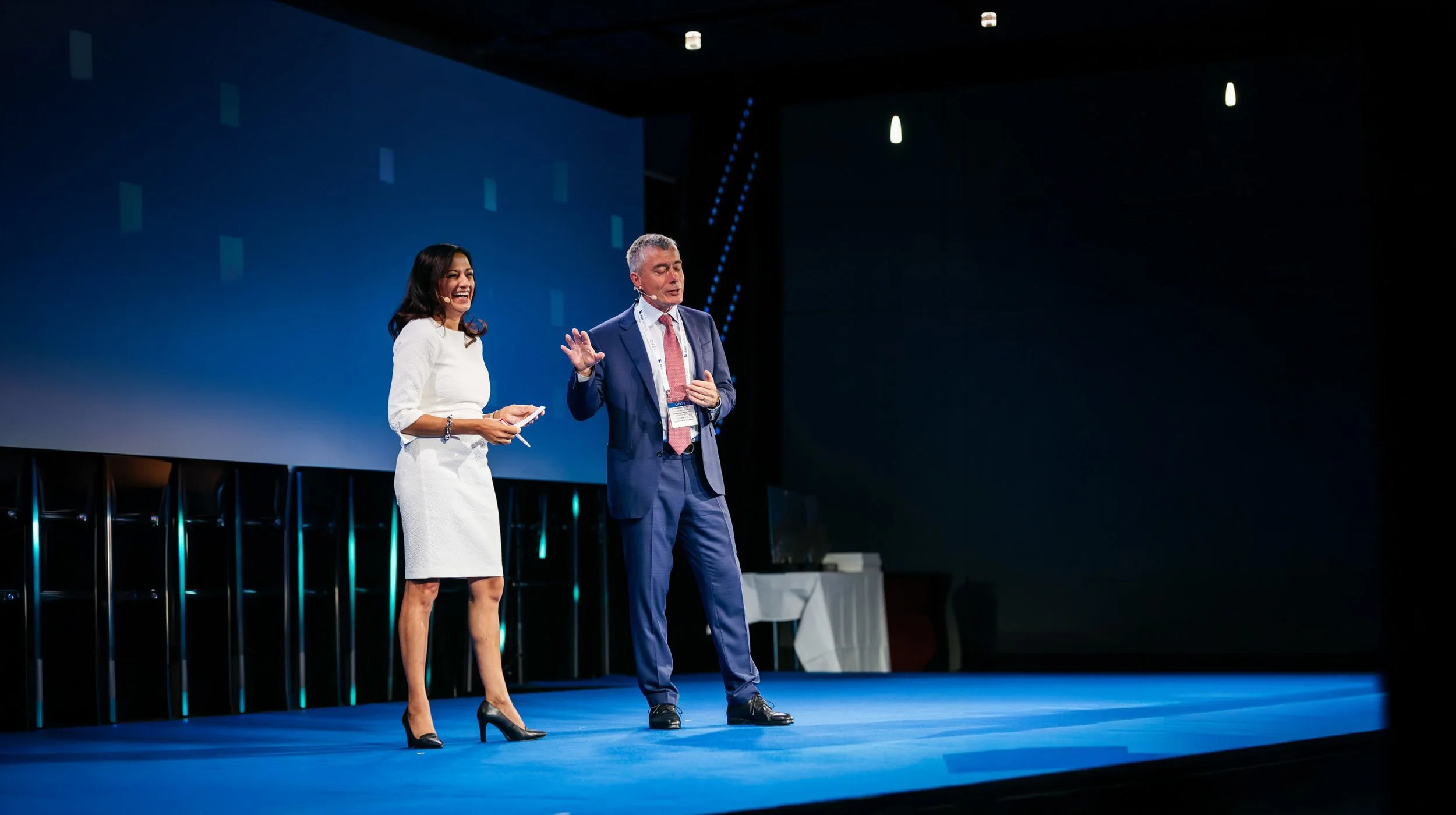
Moderator
Conference Moderation & Facilitation — keeping people honest and the conversation moving.
Effective moderation is not about staying neutral. It is about creating the conditions where real dialogue happens, difficult questions get asked, and the room leaves with more clarity than it arrived with.
I have moderated national and international conferences for more than 15 years, across sectors including energy, technology, mental health and finance. I bring the same preparation and attention to facilitation that I bring to every engagement — including the ability to read a room, manage resistance, and surface what people are actually thinking.
Past engagements include the Equinor Autumn Conference and major forums across the energy and technology sectors.
Services
-
For leaders who want to change the results they get from others. This is for leaders who want sharper results, not generic advice. The focus is your real context, your challenges, your goals. Together, we identify the patterns that shape execution, address what holds you back, and put practical strategies to work straight away.
-
For teams that want stronger alignment, better execution and less friction. Leadership teams often assume their challenge is strategy. More often, it is behaviour.
How they communicate. How they handle disagreement. How they respond under pressure. How much trust exists. What gets said openly. What gets avoided. What tone becomes normal. What standards are reinforced from the top.
Learn more -
These talks are for leaders who want more than theory. Each keynote is shaped to your context, your challenges, your audience. You leave with practical tools you can use straight away.
My speaking draws on the same unusual cross-context perspective that shapes all of my work: psychopaths, dolphins, military environments, elite sport, leadership and culture under pressure.
-
Alongside my commercial practice, I work with young people and early-career adults on the same fundamentals that shape outcomes throughout life: how to think clearly under pressure, how to communicate with confidence, and how to influence others without losing yourself.
This work is pro bono. It is also, I believe, some of the most important work I do.
Learn more -
Conference moderation & facilitation, keeping people honest and the conversation moving. Effective moderation is not about staying neutral. It is about creating the conditions where real dialogue happens, difficult questions get asked, and the room leaves with more clarity than it arrived with.

Trusted by
Frequently asked questions
-
Coaching typically focuses on helping individuals find their own answers through structured questioning. Advisory goes further: it brings an external perspective, direct challenge and specific expertise to bear on the leader's real challenges.
Nashater's 1:1 work operates across both coaching and advisory, depending on the leader and what they specifically need. What she brings in either case is a point of view, not just a process, and the grounding of someone who has led at different levels herself. She understands the pressures that come with the role from the inside.
The goal is sharper execution and better results from the people and systems around you, not just personal reflection.
-
Common areas include leadership impact and influence, decision-making under pressure, managing trust and credibility, shaping team culture, handling conflict and executive presence. The work is rarely about technical skills. It is usually about the gap between how a leader intends to land with others and how they actually do — and which behaviours are creating that gap.
It is also holistic. Where a leader's personal context is relevant — where it shapes how they show up, how they lead, or how they relate to others at work — that is part of the work too. Understanding the whole person, not just the professional role, is often where the most significant shifts begin.
-
Yes — consistently. The behaviour of a single leader ripples through every team and relationship around them. When a leader improves their clarity, consistency and emotional regulation, the people around them respond differently. The most common feedback from 1:1 advisory engagements is not just that the leader changed, but that the dynamics around them shifted too.
That combination gives her an unusually precise lens on what drives results between people: grounded in how behaviour actually forms and changes, under pressure, in extremis, across very different contexts — and tested in the real environments where leadership is most demanding.
-
Closing the gap refers to the distance between the leader a person intends to be and the leader others actually experience. Most leaders have a clear sense of their intentions. Far fewer have an accurate picture of their actual impact — the signals they are sending, the responses they are drawing, and the patterns they are reinforcing, often without realising it. The work of closing that gap starts with understanding current impact, identifying what is creating it, and changing the behaviours that are producing results you do not want. It is not about personality. It is about practice. That gap can be closed, but it requires honesty about where you currently are.