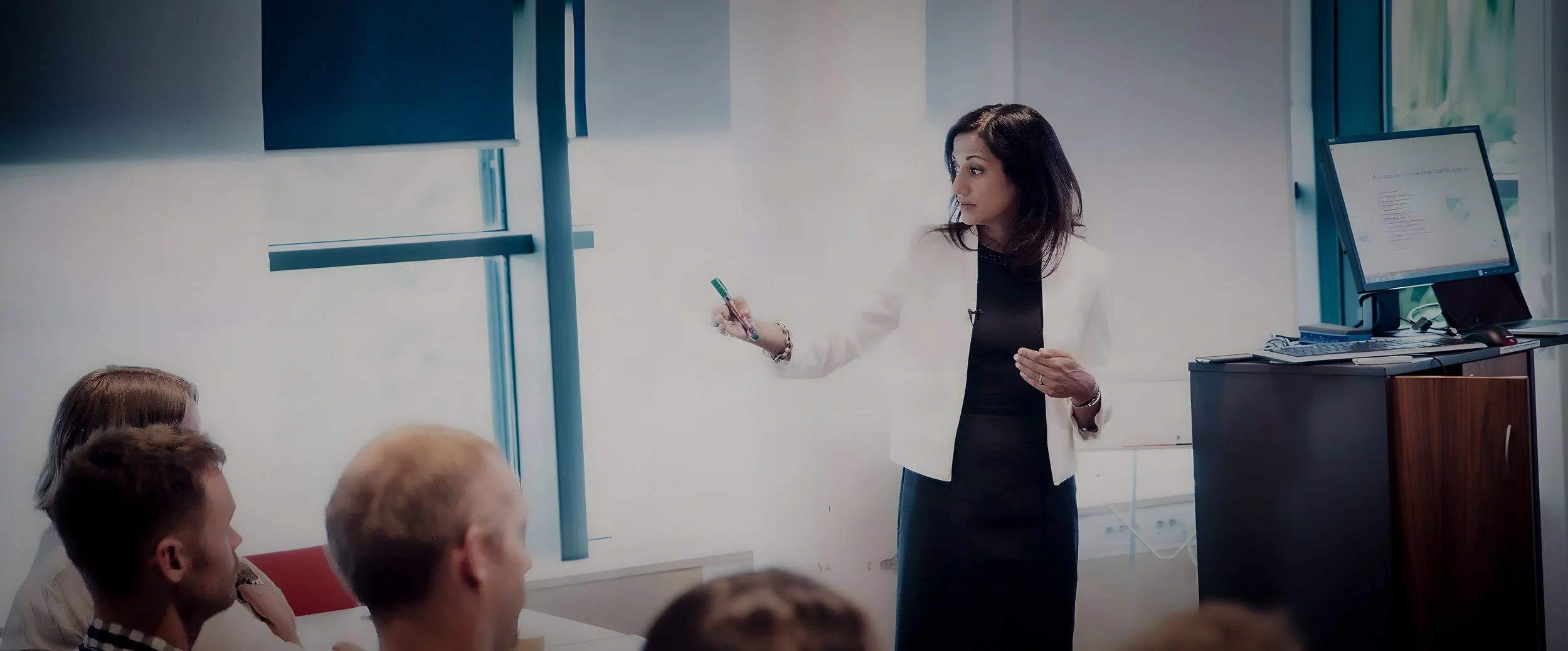
Leadership team coaching
For teams that want stronger alignment, better execution and less friction.
Leadership teams often assume their challenge is strategy. More often, it is behaviour, and the specific pattern is never the same from one team to the next, which is why this work starts with your team's actual dynamics, not a standard diagnostic.
How they communicate. How they handle disagreement. How they respond under pressure. How much trust exists. What gets said openly. What gets avoided. What tone becomes normal. What standards are reinforced from the top.
All of that affects execution. All of that affects culture. All of that affects the results the wider organisation produces.
This work helps leadership teams:
Strengthen trust
Improve communication under pressure
Surface hidden friction
Reduce defensive patterns
Improve decision-making
Align more clearly around priorities
Create stronger behavioural standards
Build healthier cultures that support better results
Because the behaviour at the top never stays at the top.
“The behaviour at the top never stays at the top.”
Services
-
For leaders who want to change the results they get from others. This is for leaders who want sharper results, not generic advice. The focus is your real context, your challenges, your goals. Together, we identify the patterns that shape execution, address what holds you back, and put practical strategies to work straight away.
-
For teams that want stronger alignment, better execution and less friction. Leadership teams often assume their challenge is strategy. More often, it is behaviour.
How they communicate. How they handle disagreement. How they respond under pressure. How much trust exists. What gets said openly. What gets avoided. What tone becomes normal. What standards are reinforced from the top.
Learn more -
These talks are for leaders who want more than theory. Each keynote is shaped to your context, your challenges, your audience. You leave with practical tools you can use straight away.
My speaking draws on the same unusual cross-context perspective that shapes all of my work: psychopaths, dolphins, military environments, elite sport, leadership and culture under pressure.
-
Alongside my commercial practice, I work with young people and early-career adults on the same fundamentals that shape outcomes throughout life: how to think clearly under pressure, how to communicate with confidence, and how to influence others without losing yourself.
This work is pro bono. It is also, I believe, some of the most important work I do.
Learn more -
Conference moderation & facilitation, keeping people honest and the conversation moving. Effective moderation is not about staying neutral. It is about creating the conditions where real dialogue happens, difficult questions get asked, and the room leaves with more clarity than it arrived with.

Trusted by
Frequently asked questions
-
High-performance culture is not built by values statements or off-sites. It is built by the consistent behaviour of the people at the top: what they model under pressure, what standards they hold, what they tolerate and what they reinforce. This work starts by surfacing the gap between the culture a leadership team intends and the one it is actually creating — then working systematically on the behavioural patterns that produce the results it wants.
-
Team building focuses on rapport, morale and interpersonal connection — usually through shared experiences. Team coaching addresses the structural and behavioural patterns that affect how the team actually works: how decisions get made, how conflict is handled, how trust is built or eroded, and what standards govern behaviour under pressure. The outcomes are more durable because they target root causes rather than surface dynamics.
-
A meaningful team coaching engagement typically runs over three to six months, with the pace shaped by the team’s specific needs and priorities. Some begin with a diagnostic phase to surface the real dynamics before the programme is designed. The most effective outcomes come from sustained engagement rather than a single off-site or workshop event.
That combination gives her an unusually precise lens on what drives results between people: grounded in how behaviour actually forms and changes, under pressure, in extremis, across very different contexts — and tested in the real environments where leadership is most demanding.
-
Because it never stays at the top. The way a leadership team communicates, handles disagreement, responds under pressure and enforces, or fails to enforce, its own standards sets the template for what becomes normal everywhere else in the organisation. People in any system learn quickly what is actually acceptable, as distinct from what is officially stated. When leadership behaviour and stated values are aligned, the culture that results is coherent. When they diverge, the behaviour, not the values, always wins.